
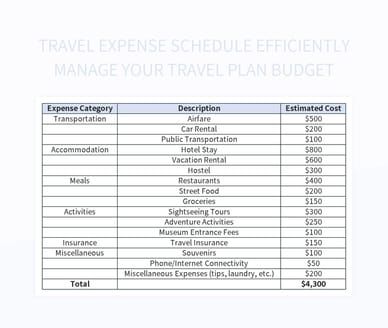
How to Manage Business Travel Efficiently: A Strategic Guide for Modern Enterprises
In the fast-paced landscape of modern tech, business travel is not a luxury—it is a necessity. From client meetings and product launches to international conferences and internal team sprints, travel logistics can rapidly spiral into a costly and chaotic burden. However, with a data-driven, streamlined approach, you can transform travel from a necessary expense into a strategic asset. This article outlines the essential frameworks and technologies that enable professionals to manage business travel with precision, cost-efficiency, and minimal disruption to productivity.
The Foundation: Centralized Travel Policy and Approval Workflows
Efficient travel management begins long before a ticket is booked. A clearly defined travel policy serves as the operational backbone, eliminating ambiguity and ensuring compliance with corporate spending limits. This policy should be embedded directly into your expense and HR systems.
- Define Spending Tiers: Establish clear per-diem rates for meals, accommodation, and ground transportation based on seniority and destination cost indices.
- Establish Approval Chains: Use automated workflows (e.g., via Slack or your ERP system) that require manager sign-off for trips exceeding a specific budget threshold or duration.
- Mandate Preferred Vendors: Negotiate corporate rates with airlines, hotel chains, and car rental services. A centralized booking portal that enforces these preferences reduces costs by 15–25%.
Leverage Technology: The Travel Management Stack
The days of manual spreadsheets are over. High-performance travel management relies on a curated stack of SaaS tools that automate booking, expense reporting, and compliance monitoring.
Core Software Categories
- Booking and Itinerary Management: Utilize platforms like SAP Concur or TripActions to aggregate flights, hotels, and car rentals into a single dashboard. These tools allow employees to self-book while enforcing policy rules in real time.
- Expense Automation: Integrate solutions like Expensify or Rydoo that automatically capture receipts via OCR, categorize expenses, and sync with your accounting software. This reduces processing time by up to 40%.
- Virtual Collaboration: Before booking a flight, evaluate if a high-fidelity virtual meeting (using a logitech room kit or Apple Vision Pro) can achieve the objective. This “digital-first” filter can cut unnecessary travel by 30%.
Pre-Trip Optimization: From Booking to Itinerary Design
Efficiency is about more than price; it is about time harvesting. Every hour spent in transit is an hour away from core work. Optimize the travel schedule to maximize productive output.
| Phase | Action | Time-Saving Impact |
|---|---|---|
| Route Planning | Book non-stop flights whenever possible; avoid red-eyes if a morning meeting is critical. | Reduces travel fatigue and lost workdays by 50%. |
| Accommodation | Select hotels within a 10-minute walk or rideshare distance from the meeting venue. | Eliminates 1–2 hours per day in commuting. |
| Productivity Setup | Ensure the hotel offers gigabit WiFi, a dedicated desk, and access to a business lounge. | Enables high-focus work during buffer hours. |
| Digital Check-in | Use mobile boarding passes and keyless hotel entry. | Saves 15–30 minutes per day in queues. |
In-Transit Productivity: The Mobile Office
The journey itself is a resource. To manage travel efficiently, convert airports, trains, and planes into secure mobile workspaces. Equip your team with lightweight portable tech:
- Universal Power: A 100W GaN charger and a 20,000mAh battery pack that supports laptops and phones simultaneously.
- Secure Connectivity: A mobile hotspot with a global eSIM (e.g., from Airalo or Google Fi) to avoid unsecured public WiFi.
- Noise-Cancelling Headphones: Attenuate ambient noise for deep work on flights or in lounges.
- Offline-Ready Tools: Sync critical documents (via OneDrive or Google Drive) for offline access. Use VS Code’s remote development capabilities or Obsidian’s local-first note-taking.
Additionally, block focus time on your calendar before and after departure. For example, use the “flight mode” period for deep code reviews or writing specifications, not for browsing social media.
Post-Trip: Streamlined Reconciliation and Data Analysis
Efficiency does not end when the traveler returns. A closed-loop system of expense reconciliation and performance analysis is critical. Promptly submit expense reports within 48 hours using automated workflows, which prevents forgotten receipts and improves cash flow.
More importantly, audit travel data quarterly. Use the analytics from your travel management platform to identify patterns:
- Are certain routes consistently over budget due to last-minute bookings?
- Are specific employees exceeding per-diem limits frequently?
- Which trips generated the highest ROI in terms of closed deals or project milestones?
Apply these insights to refine your travel policy. For instance, if data shows that a 7 AM flight on Tuesday yields 20% higher productivity than a late-night Sunday departure, adjust the default booking preferences accordingly.
Conclusion: The ROI of Travel Efficiency
Managing business travel efficiently is not merely about reducing costs—though that is a significant benefit. It is about preserving the cognitive energy of your most valuable asset: your people. By centralizing policy, leveraging a modern tech stack, optimizing itineraries for productivity, and closing the data loop, enterprises can achieve a 20–30% reduction in total travel spend while increasing employee satisfaction and output. In the competitive tech sector, where every minute counts, efficient travel management is a direct contributor to the bottom line—and a hallmark of operational excellence.